The Evolution of Ethiopia’s Budget Process
At the Center for Budgetary Governance Advocacy (CBGA), we believe that understanding the historical journey of Ethiopia’s budget system is essential to improving its future.
6/27/20251 min read
According to a 1967 account by Bulcha Demeksa (Journal of Ethiopian Law, Vol. IV, No. 2), Ethiopia’s experience with formal budgeting is a relatively recent development in the country’s financial governance.
Key Milestones
Pre-1958: Government spending was managed through ማዘዣ—authorization orders—without a comprehensive estimate of revenues or expenditures.
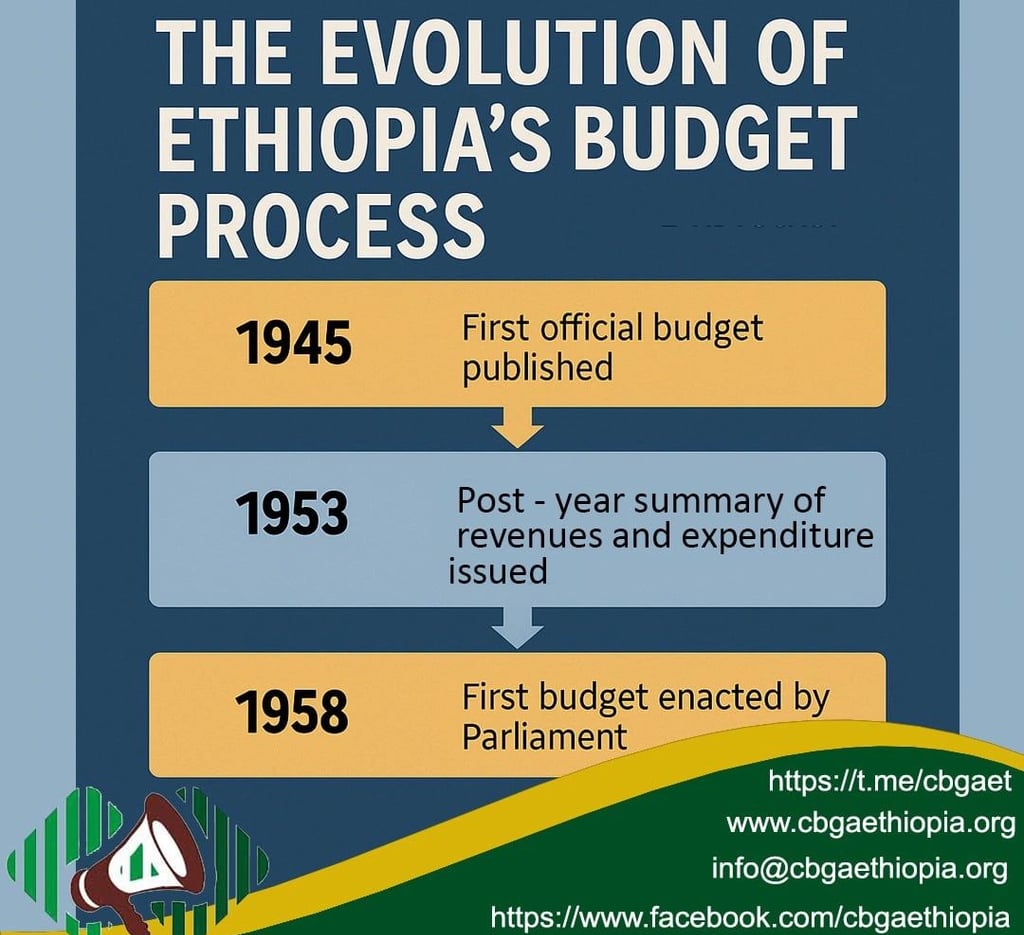
1945: Ethiopia published its first official budget, but it was limited in scope and timing.
1953: A post-year summary of revenues and expenditures was issued, offering some transparency, but not fiscal control.
1958: Marked the turning point—the first budget enacted by Parliament under the 1955 Revised Constitution, setting the stage for annual budgeting as a legal and fiscal tool.
Why This Matters Today?
The Ethiopian budget has evolved from fragmented authorizations to an institutionalized annual process. But this journey also highlights:
🔹 The importance of timely and transparent publication of budgets
🔹 The role of legal frameworks and parliamentary approval in fiscal governance
🔹 The continued need to strengthen citizen access, participation, and oversight in the budget process
Budgeting is not just a financial exercise—it is a reflection of governance, accountability, and public priorities.
As we continue to advocate for inclusive, transparent, and well-governed public budgeting, we reflect on how far Ethiopia has come—and how much further we can go.
www.cbgaethiopia.org | t.me/cbgaet | www.fb.com/cbgaethiopia | https://lnkd.in/ee8mtW3j
#BudgetGovernance #FiscalHistory #Ethiopia #CBGA #PublicFinance #Transparency GoodGovernance #BudgetEvolution #LegalFrameworks
Center for Budgetary Governance Advocacy
A local CSO advocating for participatory and robust budgetary process and human rights consciousness in budgeting.